Robert was then assigned to VA-128 at Whidbey Island, Washington, where he worked on A6-E Prowlers. From there, he moved to an Aircraft Intermediate Maintenance Department (AIMD), where he troubleshot radio and radar equipment down to the component level and performed repairs. During this assignment, Robert deployed twice — once aboard the USS Carl Vinson and once on the USS Nimitz.
After his first four years of service, Robert left the Navy and worked for Tramco in Everett, Washington, performing warranty work for Boeing. There, he repaired radio and computer issues across a variety of aircraft. After six months, he returned to the United States Navy.
Robert was then stationed at AIMD in San Diego, California, where he again deployed aboard the USS Nimitz and several other ships. He later transferred to a calibration technician role, where he learned to calibrate the test equipment used to repair the systems he had previously worked on.
Robert was later transferred to HSL-49 and an H-60 helicopter squadron, where he maintained and repaired UHF, VHF, HF and data link systems, as well as computer and radar equipment. Each radio system required daily programming, or “keying,” with updated encryption that was verified prior to flight. During deployments in the Persian Gulf, he regularly conducted late-night HF radio checks, connecting with MARS radio operators who would patch him through so he could speak with his wife.
From there, Robert transferred to VTUAV, the design team for the FireScout drone, where he worked with engineers on the design of the ground control system and the drone itself. He later moved to HSM-71, where he concluded his Navy career as the Quality Assurance Chief.
Following his retirement from the Navy, Robert worked at General Atomics developing training for Predator and Reaper drones. He then worked for Wabtec, installing Positive Train Control systems on trains in San Diego, technology similar to the data link systems used in helicopters, designed to control train operations and help prevent derailments due to speed.
Robert later moved back to Washington to be closer to his wife’s family.

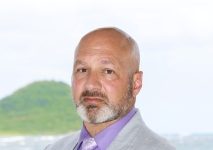 Robert Greene serves as the communications manager for the Whatcom County Sheriff’s Office. In this role, he is responsible for the microwave backbone, repeaters, portables and mobiles. He works closely with his counterpart at the City of Bellingham, who manages the dispatch centers, as well as with E-Comm911 in British Columbia to ensure interoperability between systems.