This week, APCO hosted the Wellness & Workforce Summit, an event that built on previous wellness and staffing summits to advance the conversation around workforce sustainability in public safety communications. Over 175 attendees gathered for two full days of education, emotional discussions, technology demonstrations and collaboration.
Day 1
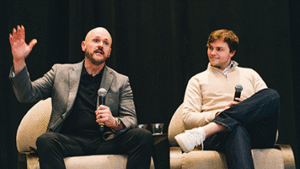 The first day of the summit opened with a presentation from Scott MacDonald, CEO/founder of GovWorx, on how responsible AI use can positively influence 9-1-1 hiring. Scott discussed that while telecommunicators may have to do it all (especially at smaller centers), leaders should know where each person fits best based on their skill set. “This is where AI can help,” he said — whether that’s to alleviate call volume, help leadership with pattern recognition to be more proactive about wellness, ease administrative burdens and more.
Keynote presenter, Angela R. Garmon, founder and CEO of ARG Coaching & Consulting Group, followed Scott. Her talk asked the question – are you thriving or are you surviving? Angela explained, “Resilience is all about being able to overcome the unexpected. The goal of resilience is not to survive but thrive”. She encouraged managers and supervisors to look below the surface to understand how their own agency’s culture impacted long-term performance:
- Challenge your own beliefs and assumptions.
- Assess the patterns and behaviors of you and your team.
- Consider how systems are impacting progress.
- How can you jump in when your team members may not be at their best?
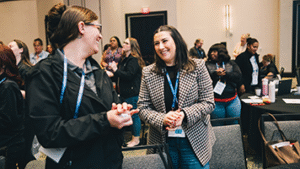 Other sessions throughout the day included mastering effective communication with the “5 chairs, 5 choices” method presented by Shantelle Oliver, CEO/Founder, ASO Leadership Solution. She explained, “Our everyday choices shape how we react to the world around us, our productivity and our overall well-being.” Amber Logan, a police communications manager with the Alamo College Police Department, led a session on reigniting purpose in 9-1-1 and how boosting passion for the field can help with recruitment efforts. “Culture is your strongest recruitment tool,” she explained. Amber noted what’s currently working in high-retention centers:
- Protect purpose through storytelling and mission-focused culture.
- Invest in mentorship and structured onboarding.
- Prioritize mental health and normalize wellness conversations.
- Offer flexible scheduling where possible.
- Recognize staff frequently in meaningful, authentic ways.
- Develop supervisors intentionally – not accidentally.
- Communicate transparently about change, expectations and decisions.
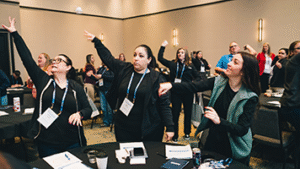 Next, Sally Panozzo, the in-service education supervisor for the Palm Beach Sheriff’s Office, led a session on understanding the fight-or-flight response in emergency communications centers (ECCs). She explained that the amygdala is the part of our brain that detects threats, and we don’t get to decide which are threats; it’s an automatic response. Veronica Dickerson, dispatcher II, Kent County Department of Public Safety, also presented in the afternoon. She brought her two therapy dogs to provide a real-world look into how therapy dogs can be incorporated into peer support efforts in ECCs. “Therapy dogs reduce cortisol and support nervous system regulation. They are a grounding presence during high stress, and they have a non-judgmental calming effect,” she said.
APCO’s director for ECC engagement, Crystal Lawrence, wrapped up the program sessions with an update on APCO’s wellness and workforce initiatives. She covered the current Fee Drop February sale, upcoming webinars, ECC award opportunities, ongoing standards efforts, legislative updates and much more.
The day closed with APCO President Jack Varnado swearing in two new Board of Directors members, Danny Murray as the new Gulf Region representative and Cheryl Konarski as the new representative for the North Central Region.
Day 2
Day two of the Wellness & Workforce Summit began with remarks from Max Keenan, the CEO and co-founder of Aurelian, who reviewed practical lessons from AI use in 9-1-1. He noted that “call taking is hard, and the expectations are nearly impossible — technology has made the job harder.” He discussed how new AI technologies are making call taking simpler and more predictive.
Other sessions in the morning centered on leadership. First, Adam Timm, founder/president of The Healthy Dispatcher, led a session on people-driven leadership. His presentation covered several factors in recruitment and retention — morale drives performance, trust enables growth, consistency builds stability, safety improves recovery and accountability shapes the climate. Next, Matthew Johnson, Foundations Public Safety Training instructor, presented on being an anti-toxic leader. He explained that toxic leaders degrade readiness, reduce organizational performance and lessen efficiency. In addition, he said, “The best employees are the ones who are most likely to be affected by toxic leaders.” In the end, creating a toxic-free workplace leads to more productive employees, decreased absenteeism, improved morale and more.
Next, APCO’s ACS program manager, Cathy Wix, introduced a new survey opportunity focused on telecommunicator sleep. APCO is distributing the survey in partnership with the National Development and Research Institutes (NDRI-USA) to better understand how work schedules affect telecommunicator health and to help share future resources to support the 9-1-1 workforce. We encourage you to take the survey and provide your valuable input.
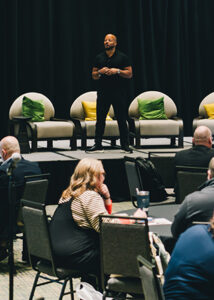 The afternoon presentations kicked off with Andre Jones, assistant executive director of the Hamad Medical Corporation Ambulance Service, discussing how ECC leaders can remain engaged and purpose-driven. “Positive culture, teamwork and resilience are what are ultimately going to let us improve well-being,” he noted. Next, a panel discussion on the future of wellness, staffing and culture in 9-1-1 highlighted a range of challenges, including overcoming the stigma of wellness in ECCs. Solutions included inviting people to speak candidly in the ECC about their own struggles, creating active peer support programs and more. The panel also discussed strategies for addressing recruitment and staffing challenges. Panelists reviewed what they are doing in their own centers, from on-site clinicians to mentorship programs, and even being strong enough to let toxic employees go.
The day wrapped up with a look at how to enhance wellness and address workforce challenges with technology. Max Keenan and Scott MacDonald discussed the importance of first identifying exactly what your ECC’s challenges are, so you can then find a technology solution. They stressed that “every additional technology you’re adding is more cognitive load for the call taker. Make sure the technology you’re implementing has comprehensive training for your employees.”
Thank you to everyone who attended the Wellness & Workforce Summit, and thank you to our sponsors and speakers for making this event possible.